
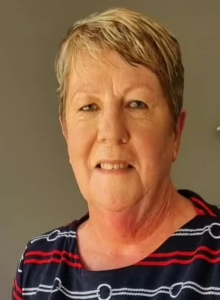
“Caring Where It Matters: How Home Care Services Support South Africa’s Most Vulnerable”, an opinion piece written by Maryann O’Hagan, experienced Home Care Provider, and Homecare Business Owner
When I started Mary Cares Home Care Services 8 years ago, I had one simple aim: to bring compassionate, dignified care into the homes of people who often fall through the cracks. In South Africa we’re used to bold headlines about healthcare challenges — overcrowded hospitals, long clinic queues, and resource constraints — but there is a quieter story unfolding in living rooms and small kitchens across the country. That story is about home-based care teams quietly supporting vulnerable, often-forgotten groups: frail elders, people with disabilities, terminally ill patients, the homeless, survivors of violence, and families in rural and peri-urban communities.
This blog is written from the front line: what I see, what our teams do, and why home care is not just a luxury but an essential, humane part of our social fabric.
Why home care matters in the South African context
- Healthcare gaps are structural. Public hospitals and clinics do incredible work, but they are overburdened. Home care reduces pressure on facilities by providing rehabilitation, chronic disease management, and palliative care where patients are most comfortable — at home.
- Geography and transport barriers. Many people live far from clinic sites or cannot afford regular travel. Home visits put care within reach.
- Social isolation and dignity. Vulnerable people often feel invisible. Consistent, respectful home visits restore dignity, connection, and routine.
- Cultural preferences. For many families, caring for elders at home is a cultural norm. Home services support those preferences while adding medical and practical expertise.
Who we help — and how
Here are groups I see every week, with concrete ways home care helps them.
-
Frail and isolated older adults
- Needs: Medication management, mobility support, wound care, companionship.
- What we do: Regular nurse visits for clinical checks, carers for bathing and feeding, and social visits to reduce loneliness. Small things — helping someone manage their pillbox, sitting down for a cup of tea and a conversation — often make a big difference for mental and physical health.
-
People with physical disabilities and chronic conditions
- Needs: Rehabilitation, assistive-device training, daily living assistance, continuity of care after discharge.
- What we do: We create home-specific care plans, provide basic physiotherapy and exercises, train families on safe transfers, and liaise with therapists and community clinics. This reduces rehospitalisation and improves independence.
-
Palliative and end-of-life care patients
- Needs: Pain control, symptom management, emotional and spiritual support.
- What we do: Our experienced palliative nurses manage pain, coordinate with doctors for prescriptions, and support families through the grieving process. Providing peaceful, dignified care at home honours patient wishes and reduces distress.
Core elements of effective home care
From our experience, effective home care combines clinical skill with social sensitivity.
- Person-centred care plans: Every client has a tailored plan that considers medical needs, social context, and cultural values.
- Skilled workforce: Trained nurses, carers, and therapists who understand both clinical protocols and trauma-informed approaches.
- Coordination with the health system: Effective two-way communication with clinics, hospitals, and social services prevents fragmentation.
- Community partnerships: Working with local NGOs, faith groups, and Councillors increases reach and trust.
- Affordable, flexible models: Sliding-scale fees, state subsidies where available, and volunteer programmes make services accessible.
Real examples that stayed with me
- A patient who didn’t want to go to a frail care, I placed carers in her home (she is a Dementia patient) and the family are in the USA, Australia and Johannesburg. She started off with carers 3 x weekly, which gradually became daily, weekly and is now 24/7 home nursing, as the family have told their mom that she will never go to a frail care.
- A 63 year old man with Cancer was at a step-down facility and he desperately wanted to go home to pass away in his own home. I placed 24/7 carers with him and his daughter in law was exceptionally supportive. He eventually passed away 2 weeks later in his home, and the daughter in law had a wake for him 2 weeks later where we had Champagne and prawns to celebrate his life.
- An elderly couple had been promised by the kids that they wouldn’t be put in a frail care. So due to limited funding, we only placed home nursing for 8 hrs a day for 7 days a week, and both wife and husband are frail so it is still working very well and the family who don’t live locally are also very supportive. I go and see them when and if needed.
Challenges we face
- Funding and sustainability. Many vulnerable people can’t afford private home care. While government and NGO partnerships help, funding gaps limit scale.
- Workforce shortages and burnout. Carers and nurses work long hours under emotional strain; investment in training, salaries, and mental health support is critical.
- Regulation and standardisation. We need clearer standards and affordable accreditation pathways so families know they’re getting safe care.
- Infrastructure — transport and equipment. Reaching remote areas requires investment in transport and portable medical equipment.
Policy and community actions that would help
- Expand subsidies or voucher programmes for home-based care targeting low-income households.
- Train and integrate community health workers into formal home care teams with certification and career pathways.
- Strengthen referral systems between hospitals, clinics, and home care providers, including electronic patient records accessible across settings.
- Invest in caregiver well-being — fair wages, training, and psychosocial support.
- Public awareness campaigns to destigmatise home care and highlight its role in primary health and palliative care.
Why home care is an act of social justice
At its heart, home care is about justice. It says: your life has value; your health matters even if you’re poor, old, disabled, or marginalised. Home care reduces hospital crowding, lowers costs over time (by preventing re-admissions), and restores dignity to lives that may otherwise be overlooked.
For me, the reward isn’t profit margins — it’s the quiet transformation in a family’s life when a mother can sleep through the night because her pain is managed, or when a grandmother walks to the door again after months of being bedridden. Those changes ripple through communities.
How communities can support local home care efforts
- Volunteer — companionship visits, transport help, or administrative support.
- Donate supplies — wound dressings, hygiene packs, or food parcels can be immediately useful.
- Advocate — speak to Ward Councillors and local clinics about integrating home care into community health plans.
- Support training programmes for carers and CHWs.
Final thoughts
Home care is not a luxury or an afterthought — it is a crucial bridge between formal health services and the daily realities of vulnerable people. In South Africa, where social and health inequalities remain profound, expanding and strengthening home-based services is both practical and moral.
If you’re a family member looking for support, a community leader wanting to partner, or a policymaker deciding on funding, remember: home care brings healthcare into the places where people live, grieve, recover, and thrive. It brings care to the margins and makes dignity a daily practice.
Related Articles

Why study a Facilities Management short course in South Africa?
May 28, 2026

How an Electrical Engineering short course can help you understand the systems used every day
May 27, 2026

Public Sector Ethics and Moral Decision-Making: Navigating Integrity in Traditional and AI-Driven Contexts
November 3, 2025

From Strategy to Action: Why Operations Need Data and AI
November 3, 2025

Tech for Tranquillity: Why People Want Their Homes to Think, Feel, and Be Serene
October 22, 2025

Shadow AI: South Africa’s Invisible Cybersecurity Crisis and How to Fight Back
October 21, 2025
How do you enrol
Enrol in 10 minutes or less
Fill out your contact details below.
Our advisors will call you back.
You'll get access to your programme within 48hours.
Chat to one of our enrolment advisors
Our Enrolment Advisors will guide you through everything from course choice to enrolment.
"*" indicates required fields