
Tech for Tranquillity: Why People Want Their Homes to Think, Feel, and Be Serene – By Suhail Chohan
People aren’t chasing “smart homes” for the sake of shiny gadgets. They’re chasing calm. With blurred lines between work and life, constant notifications, and overlapping responsibilities, serenity at home isn’t a luxury, it’s a mental health strategy. The new design brief is clear: make my home intuitive, emotionally supportive, and beautifully simple.
Below, we’ll unpack how to design tranquil, tech-enabled spaces using practical interior design principles such as colour, lighting, layout, materials, and style—then show how today’s tools (yes, including AI) help you deliver a space that thinks along with you.
The “Wellness-First” Smart Home
Modern “smart” is less about commanding devices and more about ambient intelligence: environments that respond softly to you, not the other way around. Think morning light scenes that wake you gradually, acoustic comfort that hushes city noise, air that stays fresh without effort, and discreet nudges that lower energy use that is all wrapped in a calm visual story.
What serenity looks like in practice:
- Predictable rhythm: Lights that shift warmer in the evening and brighter cooler for focus hours.
- Low cognitive load: One-tap or automated scenes instead of juggling a dozen apps.
- Sensory comfort: Quiet HVAC, soft textures, reduced glare, and mindful colour palettes.
- Sustainable ease: Sensors and schedules that cut waste without constant attention.
Design the Calm (Before You Add the Tech)
Smart tech amplifies good design; it can’t rescue poor planning. Start with the interior fundamentals and then layer tech to support them.
1) Elements & Principles of Design → Visual Harmony
- Elements: Space, line, form, light, colour, texture, pattern
- Principles: Balance, rhythm, unity, emphasis, proportion
Quick win: Use symmetry (or near-symmetry) in a living room layout to signal calm. Repetition like matching lamps or rhythmic timber slats builds a soothing cadence.
2) Colour Theory & Lighting → Mood Management
- Colour: For serenity, lean into low-saturation hues like sage, mushroom, misty blues. Use deeper tones sparingly to ground a space (think charcoal joinery).
- Lighting: Layer it.
- Ambient: Indirect ceiling or wall wash for overall softness
- Task: Focused lamps for reading/work
- Accent: Subtle highlights on art or texture
Smart assist: Create circadian-friendly scenes. Cool-bright for focus (10:00–14:00), warm-dim for wind-down (after 18:00). Use motion sensors in passages for gentle night lighting.
3) Space Planning & Layout → Effortless Flow
- Map zoning (work, rest, social, recharge).
- Maintain clear circulation paths; avoid visual clutter at decision points (entries, desk views).
Smart assist: Use contact sensors to trigger “arrival” scenes (hall light) and “focus” scenes (task lamp + noise masking).
4) Materials, Textiles & Finishes → Sensory Calm
- Prioritise texture moderation: pair smooth (stone, glass) with soft (bouclé, linen) to avoid sensory overload.
- Opt for low-VOC paints and natural fibres for better indoor air quality.
- Add acoustic textiles (curtains, rugs, upholstered panels) to reduce reverb, remember calm has a sound.
Smart assist: Air quality monitors that quietly nudge ventilation; automated blinds to cut glare and heat.
5) Interior Styles → Less Noise, More Identity
- Japandi and Scandi deliver clean lines and light palettes.
- Afro-minimalist blends warm timbers, earthen tones, woven textures, and crafted forms that are rooted, serene, and contemporary.
Tip: Choose one lead style and borrow accents from another. “Unity calms, while cluttered stylistic mashups agitate.
The “Think & Feel” Tech Stack (Curated, Not Crowded)
Start small and scene based. Pick a central platform (HomeKit, Google Home, Alexa, or a privacy-forward hub) and build scenes that match daily rhythms.
- Lighting: Smart bulbs or dimmers + tuneable white. Scenes: Morning Rise, Deep Work, Golden Hour, Wind Down, Night Path.
- Sound: Compact speakers for low-volume ambience; white noise for focus if you live on a busy street.
- Climate & Air: Smart thermostat or schedules for split units; AQI sensors that prompt window/plant care.
- Shades: Automate to block midday heat and reveal morning sun.
- Wellness cues: Gentle reminders for stretch breaks, hydration, or screen curfews—kept off the main layer of your attention.
Golden rule: Hide the tech, highlight the feeling. Tuck hubs in cabinets, route cables cleanly, and keep interfaces simple.
Micro-Scenarios (How It Comes Together)
Morning Reset (Bedroom):
Warm 2700K bedside lamps brighten over 15 minutes → sheer blinds rise to 30% → diffuser mists a grounding scent → low-tempo playlist begins. You get out of bed relaxed, not startled.
Deep Work (Spare room/desk nook):
Cooler 4000K task lamp → noise masking → to-do widget displays three priorities on an e-ink panel → phone shifts to Focus mode. Your brain gets one clear signal: “do this now.”
Evening Unplug (Living room):
Lights to 2200–2400K → TV bias light reduces eye strain → smart plug cuts blue LEDs on chargers → playlist swaps to acoustic. Your nervous system slides towards rest.
A South African Snapshot
Thabo and Naledi, Rosebank apartment
Two jobs, one-bedroom, constant context-switching. Their serenity recipe:
- Layout: Sofa faces a calm focal wall (textured paint + single framed piece), desk tucked into a nook with a panel screen divider.
- Materials: Heavy-lined curtains for acoustic control, sisal rug for tactile grounding, low-VOC paint in warm grey green.
- Lighting: Smart dimmers on ceiling spots; a floor lamp with tuneable white for reading; motion-activated night path to the kitchen.
- Tech: A single hub controls scenes; blinds run on a midday heat block; an energy monitor helps them curb usage without thinking about it.
Result? The apartment stops shouting. It starts whispering.
From Mood Board to Mini Project (Your Step-by-Step)
- Clarify the client brief (even if the client is you).
- Top three feelings (e.g., “uncluttered, warm, restorative”).
- Lifestyle patterns (WFH days, gym times, hosting frequency).
- Non-negotiables (a reading chair, pet-friendly fabrics).
- Create the mood board.
- Palette: 1 base neutral, 1 secondary neutral, 1 accent hue, 1 material highlight (e.g., oak).
- Texture mix: 50% smooth, 30% soft, 20% patterned/mineral.
- Lay out the space.
- Map zones. Keep main circulation at least 900 mm.
- Anchor the room with one strong form (sofa, bed, dining table).
- Specify the lighting layers.
- Ambient wash + task at key stations + a single accent.
- Predefine four scenes (Morning, Focus, Social, Wind Down).
- Choose materials & finishes.
- Prioritise tactile comfort + easy cleaning.
- Add one acoustic improvement (thicker rug or curtain).
- Add smart scenes (not a device zoo).
- Start with lighting + one wellness sensor (air quality or occupancy).
- Test, refine, then consider blinds or sound.
- Budget wisely.
- Allocate: 35% seating & bed, 20% lighting, 15% textiles, 15% storage, 10% tech, 5% art/greenery.
- Mix high/low: invest in the pieces you touch daily; save on occasional-use décor.
- Present your mini project.
- One-page plan with the layout, palette, materials, and four scenes.
- A short narrative: “How your home will feel at 07:00, 11:00, 18:00, 22:00.”
Common Pitfalls (and Calm Fixes)
- Too many controls: If you need a manual every night, you’ve overdesigned. Consolidate to 3–5 core scenes.
- Harsh light at the wrong time: Warm it up after sunset; reduce overhead glare; add a floor lamp.
- Pretty but noisy: Add rugs, lined curtains, or upholstered panels, acoustics are part of calm.
- Clashing styles: Pick a lead style and keep accents consistent in tone and material.
Want to go deeper?
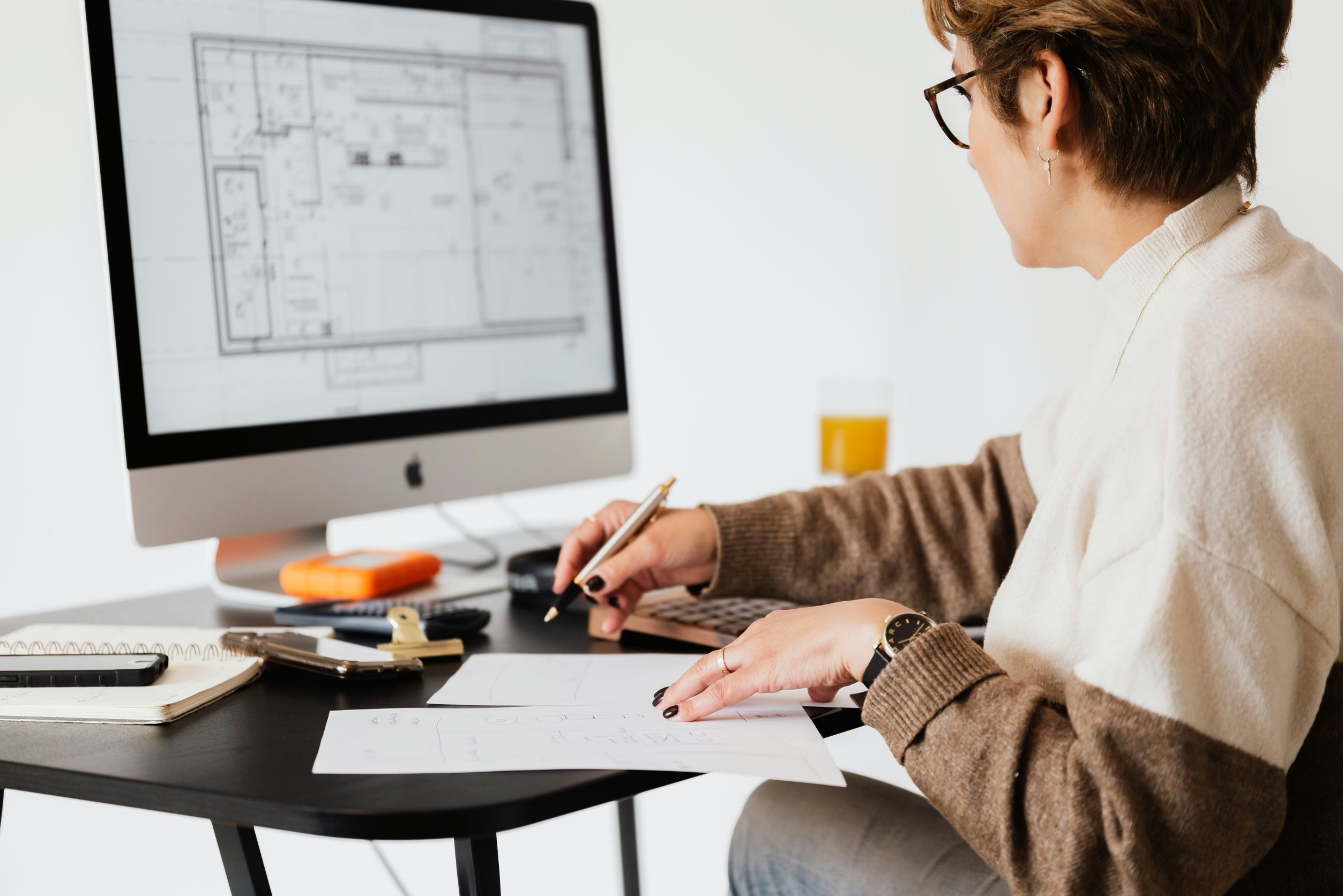
If you’d like structured, beginner-friendly guidance that covers design principles, colour and lighting psychology, space planning, style blending, mood boards, plus digital design and AI tools? Consider the Interior Design short course at iQ Academy. You’ll learn to turn a calm vision into a professional, client-ready concept without needing prior experience.
Final Thought
A tranquil home isn’t quiet by accident. It’s the outcome of clear intent (how you want to feel), disciplined design (what you choose to see, touch, and hear),and gentle technology (what your space does for you automatically). When your home thinks with you, serenity stops being a moment but becomes your home lifestyle.
Related Articles

Why study a Facilities Management short course in South Africa?
May 28, 2026

How an Electrical Engineering short course can help you understand the systems used every day
May 27, 2026

Public Sector Ethics and Moral Decision-Making: Navigating Integrity in Traditional and AI-Driven Contexts
November 3, 2025

From Strategy to Action: Why Operations Need Data and AI
November 3, 2025
Tech for Tranquillity: Why People Want Their Homes to Think, Feel, and Be Serene
October 22, 2025

Shadow AI: South Africa’s Invisible Cybersecurity Crisis and How to Fight Back
October 21, 2025
How do you enrol
Enrol in 10 minutes or less
Fill out your contact details below.
Our advisors will call you back.
You'll get access to your programme within 48hours.
Chat to one of our enrolment advisors
Our Enrolment Advisors will guide you through everything from course choice to enrolment.
"*" indicates required fields