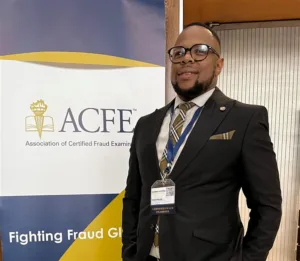
Public Sector Ethics and Moral Decision-Making: Navigating Integrity in Traditional and AI-Driven Contexts by Tumelo Nkohla, MBA
Ethics is not a “nice to have” principle or virtue in the society, it is a core principle that should govern a society grounded on moral system that prevents or guide on wrongdoing. When ethical norms weaken, the downstream effects are immediate and brutal. Unethical practices in society has given rise to delayed or misdirected spending in key service delivery initiatives within the South African government. As a result of these unethical actions, citizens experienced various challenges during the pandemic in hospitals such as degraded service delivery, overcrowding, staff burnout, and reputational damage. These negative experiences made it harder to attract skilled professionals post covid-19 period, thus compromising future quality of care and stretching budgets for years. Building a foundation of strong ethical culture in the the South African Public Sector is not just about catching wrongdoing, instead it is about teaching the citizens of this country the importance of doing the right thing to even when no one else is watching to avoiding costly failure in the first place.
Ethics is the system of standards, rules, and principles that guide conduct. On the other hand, Morality reflects the values and judgments about right and wrong underpinning those standards. In South Africa’s public administration, these ideas are founded through Section 195 of the Constitution in Chapter 10 and are codified and operationalised through the Public Service Regulations in Chapter 2 reflecting on Code of Conduct. The code outlines key fundamental ethical principles such as compliance to the laws and the Constitution; Relationships with the Public, Ethical Conduct and Relationships of Employees amongst each other. Furthermore, the Batho Pele (“People First”) principles demand service that is courteous, transparent, fair, and value-for-money. All these founding legal provisions set expectations for integrity, impartiality, accountability, and citizen-centered delivery within the South African public sector.
Two further pillars, which provide for ethical culture and prevention of unethical conduct in the public sector includes amongst others the Prevention and Combating of Corrupt Activities Act (PRECCA), which criminalises corruption and supports investigative measures and the Protected Disclosures Act, which provides cover for whistle-blowers who report irregular conduct.
When you are under pressure from tight deadlines, political heat, or a crisis situation, it is particularly important to make ethical decisions and choices, which when put to scrutiny, will pass the ethical test (also known as, The Eye of the Needle). The PLUS model is widely used because it is easy to apply at your desk and seeks to guide towards ethical decision making in the following manner:
- P – Policies: Is the decision you are making consistent with organisational policies and codes (e.g., Code of Conduct, supply chain management, and Batho Pele principles)?
- L – Legal: Is the decision legal under applicable laws and regulations (e.g., PFMA, PSA, PSR, PRECCA)?
- U – Universal: Is the decision aligned with our core values and principles, and would it be acceptable to the public if fully transparent?
- S – Self: Does the decision pass the “front-page test”? Would you be comfortable owning this decision?
This opinion piece places the PLUS model as one of the set of “filters” a person should embark during the decision-making process, and again after implementation to check outcomes and unintended consequences. Below is a Mini case study within the Health Sector dealing with PPE procurement under crisis
Context: During a pandemic wave, a district health office must urgently procure PPE. A well-known supplier offers an efficient and effective delivery of services albeit at a steep price. On the other hand, another service provider offers the service at lower prices but requests a shortcut around standard vetting processes. The question is how you as a public servant, decide on what should be should be considered as an ethical decision using the PLUS model principle.
- P (Policies): The Code of Conduct requires fairness and avoidance of conflicts; SCM policy requires competitive, transparent processes—even in emergencies with proper deviation documentation. Proceed only with documented emergency procedures and conflict checks.
- L (Legal): PRECCA outlaws inducements, this means that any irregular deviation could trigger investigations. Refuse shortcuts; log all decisions and reasons
- U (Universal): Batho Pele emphasises value for money and transparency. Seek best value at pace; publish the deviation and rationale.
- S (Self): Would you be comfortable if the media requested these records? If not, rethink.
Outcome: The office documents an emergency deviation, invites multiple quotes under compressed timelines, conducts rapid due diligence, and publishes the award details post-hoc. This protects staff, ensures value for money, and sustains public trust—even under crisis conditions.
Hence it is key for employees when making decisions to always consider intended and/unintended consequences of the outcome.
How does Artificial Intelligence as the energy ethical risk fit into all this discussion?
As Public entities, and government departments increasingly adopt AI for triage, resource allocation, fraud detection, citizen engagement, and HR analytics such as Chat GBT and MS Copilot, AI note readers and other sophisticated solutions. Such update on business model brings about new ethics opportunities and risks, such as algorithm bias, opacity, data privacy breaches, and over-reliance on algorithmic outputs.
South Africa has signalled direction through the AI Institute of South Africa (AIISA) launched in partnership with universities (UJ, TUT) and government to build skills and responsible adoption. Globally recognised guardrails like UNESCO’s Recommendation on the Ethics of AI and the OECD AI Principles emphasise human rights, transparency, accountability, robustness, and fairness as useful anchors for local policy and project design.
A case study on AI scenario dealing with algorithmic bed allocation helps to unpack the underlying ethical dilemmas faced by this new phenomenon below:
A hospital considers an AI tool to prioritise ICU beds.
- Risks: Historic data may reflect inequities; the model could under-allocate to certain communities, which could result in discrimination and litigation on the side of the hospital.
- Ethical response: Run a bias impact assessment, require explainability for decisions, maintain human-in-the-loop oversight, and publish a model card describing training data, limitations, and performance. Align with UNESCO/OECD principles and local data protection norms; subject the tool to clinical governance before deployment.
Below are high-level strategies to strengthen ethical governance taking into consideration both the traditional and AI driven contexts:
- Codify and refresh standards: Develop and implement structured training programs for all staff on the Code of Conduct and Batho Pele, with scenario-based refreshers (e.g., procurement, recruitment, data use). Map standards to team-level checklists.
- Institutionalise the PLUS check: Develop and introduce a one-page PLUS assessment for high-risk or time-compressed decisions such as emergencies, single-source awards, major data use and keep the checklist with the record file and signed by the delegated authority.
- Protect people who speak up: Publicise Protected Disclosures Act, and it is guiding policies which provide channels and the independence of intake, measure response times, and outcomes. Offer anonymous options and anti-retaliation briefings for managers.
- Strengthen anti-corruption controls: Align SCM and contract management with PRECCA obligations; run conflict-of-interest audits before and after awards; publish supplier beneficial ownership.
- Ethics-by-design for AI: Means adopting a concise AI ethics policy that references UNESCO and OECD principles while conducting algorithmic impact assessments for high-risk applications such as health, grants, and policing which then enforces robust data governance through data minimisation, security measures, and approved sharing protocols; and requiring human oversight with appeal mechanisms for all significant automated decisions.
- Transparent communication: Publish plain-language decision rationales for major procurements and AI deployments; invite public comment where feasible (citizen panels, Izimbizo).
- Leadership modelling. Senior managers must disclose interests, decline gifts, and visibly use the PLUS filter in meetings.
- Capability building: Short, practical micro-courses for frontline supervisors (procurement ethics, data ethics, whistleblowing), plus specialist training for data/AI teams (fairness testing, explainability).
In conclusion, Ethics is the “quiet infrastructure” that keeps public institutions resilient—long before a crisis hits. When we embed clear standards such as Code of Conduct, Batho Pele principles, use simple tools like the PLUS filter under pressure, and build AI systems with transparency and human oversight, we prevent the cascade of failures that cost lives, erode budgets, and drain talent. The path forward is not abstract instead, it is daily, documented, and doable. If this article sparked ideas, watch the webinar to turn them into practical routines your team can apply tomorrow protecting people, public money, and trust.
Related Articles

Why study a Facilities Management short course in South Africa?
May 28, 2026

How an Electrical Engineering short course can help you understand the systems used every day
May 27, 2026
Public Sector Ethics and Moral Decision-Making: Navigating Integrity in Traditional and AI-Driven Contexts
November 3, 2025

From Strategy to Action: Why Operations Need Data and AI
November 3, 2025

Tech for Tranquillity: Why People Want Their Homes to Think, Feel, and Be Serene
October 22, 2025

Shadow AI: South Africa’s Invisible Cybersecurity Crisis and How to Fight Back
October 21, 2025
How do you enrol
Enrol in 10 minutes or less
Fill out your contact details below.
Our advisors will call you back.
You'll get access to your programme within 48hours.
Chat to one of our enrolment advisors
Our Enrolment Advisors will guide you through everything from course choice to enrolment.
"*" indicates required fields